Cory Mosley is the Vice President of Growth for Pecan Jacks. He supports franchise growth and brand strategy while helping protect the quality behind every scoop, bringing “A Sweet Day Is A Bite Away®” philosophy to customers across the country.

How long do pralines last? The answer depends on the recipe, how recently they were made, and how they are stored. Traditional sugar-and-pecan pralines are often at their best in the first several days, when their aroma and texture are appealing. Under cool, dry conditions in a well-sealed container, many may remain enjoyable for roughly one to two weeks, but that is a general guideline, not a guaranteed shelf life. Moisture, heat, handling, and the recipe can shorten the window. If you are buying pralines for a gift or gathering, ask the maker for freshness guidance and plan the purchase close enough to serving that you can follow it. Pecan Jacks offers pralines in several styles, including classic, rum, and bourbon varieties. This guide explains what affects freshness, how to store pralines, and how to time a purchase without assuming a date the maker has not provided.
Ask about pralines for your occasion
What Determines How Long Pralines Stay Fresh?
Pralines do not all have the same keeping time. Their freshness depends on the candy itself, the air and moisture around it, and the time between purchase and serving. Understanding those factors helps you make a sensible plan instead of relying on one universal expiration date.
Recipe and texture matter
Pralines are sugar candies, but recipes and methods vary. Differences in the cooked sugar mixture, proportions, cooling, and handling can change how firm, tender, or sticky a batch feels. A softer praline may respond to humid air differently from a firmer one. Added flavors do not tell you by themselves how long the candy will keep. For a specific product, the maker's information is more useful than a general estimate.
Freshness is also about quality, not only whether a candy is safe to eat. A praline can lose the texture and aroma that made it appealing before it shows an obvious sign of spoilage. For gifting, texture and presentation matter. A candy that has become tacky or unusually hard may not offer the experience you intended, even if there is no visible mold or off smell.
Air, warmth, and humidity change the result
Air exposure can dry candy or let it pick up surrounding odors. Warm conditions can soften it, while moisture in the air can make a sugary surface feel sticky. Direct sunlight and a spot near a stove, oven, or sunny window create avoidable temperature swings. Keep pralines sealed and in a stable, cool, dry place rather than leaving them open on a counter.
Handling before purchase matters, too. If pralines have been carried in a warm car, left out at an event, or repeatedly opened, their condition may change sooner. Moving them into a container later cannot undo earlier exposure, but good storage can help preserve the quality they still have.
How Should You Store Pralines at Home?
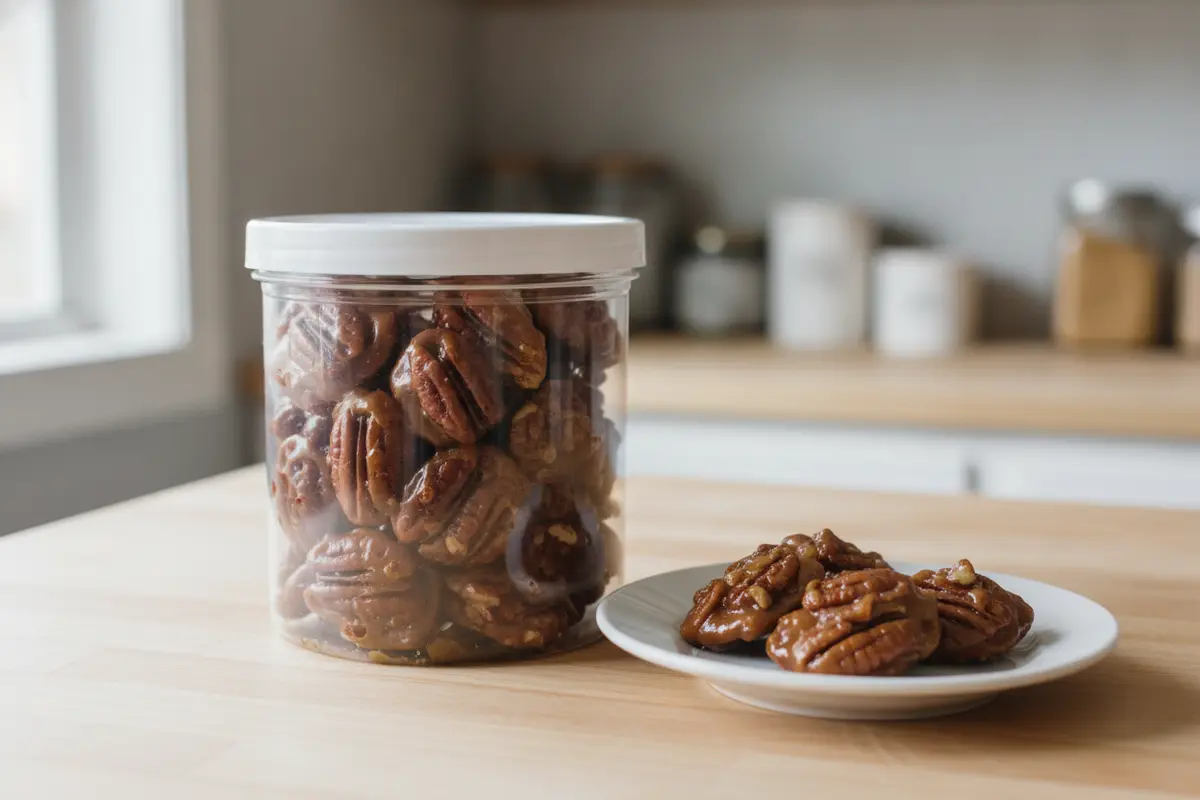
Start with the maker's directions. If none are available, protect the candy from air, heat, moisture, and strong odors, and avoid unnecessary handling. A sealed container in a cool, dry cupboard is a practical starting point for short-term storage.
Choose a stable, dry place
Keep pralines away from sunlight, cooking heat, steam, and damp areas. Choose a cupboard or pantry that stays at a fairly consistent room temperature. Avoid storing them beside fragrant foods, since candy can pick up odors. If the original package is closed and intended for storage, leave it intact until you are ready to serve or give the pralines. If you have opened it, transfer the candy to a clean airtight container.
Use a container large enough to avoid crushing the pieces, but not so large that the pralines sit exposed to lots of air. Handle them with clean, dry hands or serving tools. Each opening lets in air and moisture, so portion out what you need and close the container again. For a gift, keep it in a dry place until handoff and share any maker-provided storage directions with the recipient.
Should pralines go in the refrigerator?
Refrigeration is not automatically the best choice for candy. Cold storage can introduce condensation when a chilled container is brought into a warm room, and that moisture may affect a sugary surface. The refrigerator can also expose an unsealed container to other food odors. Unless the maker specifically recommends refrigeration, a cool, dry cupboard is generally simpler for short-term storage.
If the maker recommends chilling, keep pralines sealed while they are cold. Let the closed container adjust toward room temperature before opening it. That helps limit condensation forming directly on the candy. Do not leave the container open while it warms, and follow product-specific directions over general advice.
 Can you freeze pralines?
Freezing can affect texture and may create moisture during thawing, so do not assume it is suitable for every praline. Ask the maker whether its particular candy freezes well before trying it. If advised to freeze it, use an airtight, freezer-safe container and let it thaw while still sealed. Open only after it has reached room temperature. For a near-term gift or gathering, buying closer to the occasion is usually more straightforward.
How Can You Plan a Praline Gift or Serving Date?
Work backward from the occasion, but let the maker's freshness guidance set the final timing. Buying close to the date helps preserve quality and leaves less time for storage conditions to go wrong. If you are comparing sweets for an event, consider the serving plan as well as the calendar.
Use this timing as a planning guide
The ranges below are practical planning cues, not product guarantees. They assume careful handling and do not replace a date or instructions supplied by the person who made or sold the pralines.
SituationPractical approachWhat to confirmServing within a few daysBuy near the event and keep pralines sealed in a cool, dry place.Ask whether the package has specific storage directions.Keeping them for about one to two weeksTreat this only as a broad quality estimate for many traditional pralines, not a promise for every recipe.Check the maker's freshness window and any date on the package.Planning farther aheadDo not assume the candy will retain its best texture for an extended period.Ask about a later purchase date, freezing, or another gift option.Taking pralines to an eventKeep them protected during transport and serve them at a comfortable room temperature.Consider travel time, warm weather, and when the container will be opened.
Questions to ask before you buy
When timing matters, a brief question can prevent guesswork. Ask when the pralines were prepared or packed if that information is available, how long the maker recommends keeping them, and whether the package should remain sealed until serving. For an event, ask whether a particular flavor has different handling instructions. Do not assume every praline variety shares exactly the same window.
If you are purchasing a gift, consider how long it may sit before the recipient opens it. A present handed over right away has different needs from one mailed, displayed, or delivered well before a celebration. Pecan Jacks lists its praline varieties online. Contact the shop to confirm current product details and freshness guidance for your order. Avoid promising a recipient a specific shelf life unless you have the maker's guidance.
Match the gift to the occasion
Pralines work well when you want a compact sweet to share after a meal, add to a host gift, or place alongside other desserts. For a broader assortment, consider the occasion and the recipient's preferences. Pecan Jacks also offers chocolate gifts and caramel sauces, which provide other formats to discuss when coordinating a gift.
For a local visit, check the Pecan Jacks locations page before setting your plans. Store hours and product availability can vary, so confirm details with the location. If the event includes a group outing or dessert plan, the community and events information can help you find the appropriate next step.
How Can You Tell When Pralines Have Changed?
Look at, smell, and handle the candy carefully before serving it. A small texture change may be a quality issue rather than an automatic sign that it is unsafe, but any clear spoilage sign means you should discard it. When unsure, do not serve it to guests.
Check for visible and sensory changes
Notice whether the surface has become unusually wet, sticky, or discolored, and whether the candy smells different from when it was fresh. Mold, a rancid or otherwise unpleasant odor, or evidence of contamination are reasons not to eat the pralines. A dry, hardened piece or a tacky surface can point to quality loss or poor storage. If a package has a use-by or best-by date, take it seriously and ask the maker if you need clarification.
Do not taste a piece to investigate a clear spoilage concern. If the candy simply seems drier or softer than expected but has no obvious spoilage sign, compare it with the maker's advice. Appearance alone cannot confirm a precise shelf life, and normal differences between batches can affect texture. If it is a gift, offer fresh candy rather than asking the recipient to judge a questionable piece.
Keep serving conditions in mind
Once pralines are set out, protect them from direct sun, heat, moisture, and repeated handling. Place only the amount you expect people to eat on the serving plate, leaving the rest sealed. At an outdoor gathering, use shade and bring out smaller portions as needed. This keeps the remaining candy protected for later servings.
Use clean serving utensils and keep the platter away from dishes that may spill or steam. If pralines have been sitting in hot conditions for a long time, or their condition is uncertain, do not rely on a general estimate to decide whether they are suitable to serve. Check the product guidance and use common sense.
What Else Should You Consider When Buying Pralines?
Freshness is only one part of a good purchase. A useful plan also accounts for the recipient, the number of people sharing, and the distance between purchase and serving. Choosing a date and storage spot in advance makes the candy easier to enjoy at its best.
Choose a source with clear product information
Look for a seller that can answer questions about its own pralines. Product names, varieties, and ingredients can differ, so confirm the details rather than relying on a general description. Pecan Jacks shares its company background on the Our Story page and product information on its site. For current ordering questions, use the contact page rather than guessing about freshness or delivery conditions.
If you want to make pralines part of a larger dessert table, browse the ice cream selection and coordinate what fits your gathering. Confirm current store availability and handling guidance directly. The best combination is one you can serve on schedule without leaving sweets exposed to warmth or moisture.
Keep the plan simple
Before purchase, write down the serving date, where the pralines will be stored, and who will transport them. If the gift will be given before it is eaten, include the maker's instructions when available. For a party, serve pralines in manageable batches rather than placing the full supply out at the beginning. These small choices make freshness easier to manage without requiring special equipment.
Most importantly, let the product-specific recommendation guide your decision. A general range can help with planning, but it cannot account for every recipe, preparation date, or journey. If the answer matters to your event, ask before you order and keep the reply with your event notes.
Frequently Asked Questions About Praline Freshness
These answers offer general guidance. For a specific package or flavor, follow the maker's instructions and confirm details with the seller.
How long do pralines last at room temperature?
Many traditional pralines are best enjoyed within several days, and some may remain enjoyable for roughly one to two weeks when kept sealed in cool, dry conditions. The recipe and storage history matter, so use that only as a broad estimate and ask the maker for the product-specific window.
Do pralines need to be refrigerated?
Usually, refrigeration is not the first choice unless the maker recommends it. Cold storage can lead to condensation when the container warms, and an unsealed package may pick up odors. A cool, dry cupboard is often more practical for short-term storage.
Can I buy pralines well before I need them?
Ask the seller how far in advance to buy. If you cannot confirm a longer freshness window, plan to purchase closer to serving and keep the candy sealed. A general estimate should not replace an instruction for the exact product.
How can I keep pralines fresh after opening?
Move them to a clean, airtight container if the original package is no longer sealed. Keep it in a cool, dry place away from direct sun, heat, moisture, and strong odors. Open only when serving and close it again afterward.
What should I do if pralines look or smell unusual?
Do not serve candy with mold, an off smell, contamination, or another clear spoilage sign. If it has only a texture change and you are uncertain, contact the seller. When in doubt for a gathering or gift, choose a fresh replacement rather than risking an unpleasant experience.
Ready to Plan Your Praline Purchase?
The simplest way to protect praline freshness is to buy with the serving date in mind, keep the candy sealed in a cool, dry place, and follow the maker's directions. For a gift or event, ask about the specific variety and freshness window before you finalize your timing. Visit the Pecan Jacks pralines page to review the varieties, then contact the shop with questions about your plans. With a little attention to storage and timing, you can serve pralines when their texture and flavor are at their best.